Butterfly Drawing: Easy, Cute & Step-by-Step References
Browse original butterfly drawing pencil references across simple outlines, cute sketches, and shaded studies. Tap any image to open Study Mode with a proportion grid and horizontal flip.
Butterfly Drawing Reference Gallery
Click any sketch for Grid & Flip Study Mode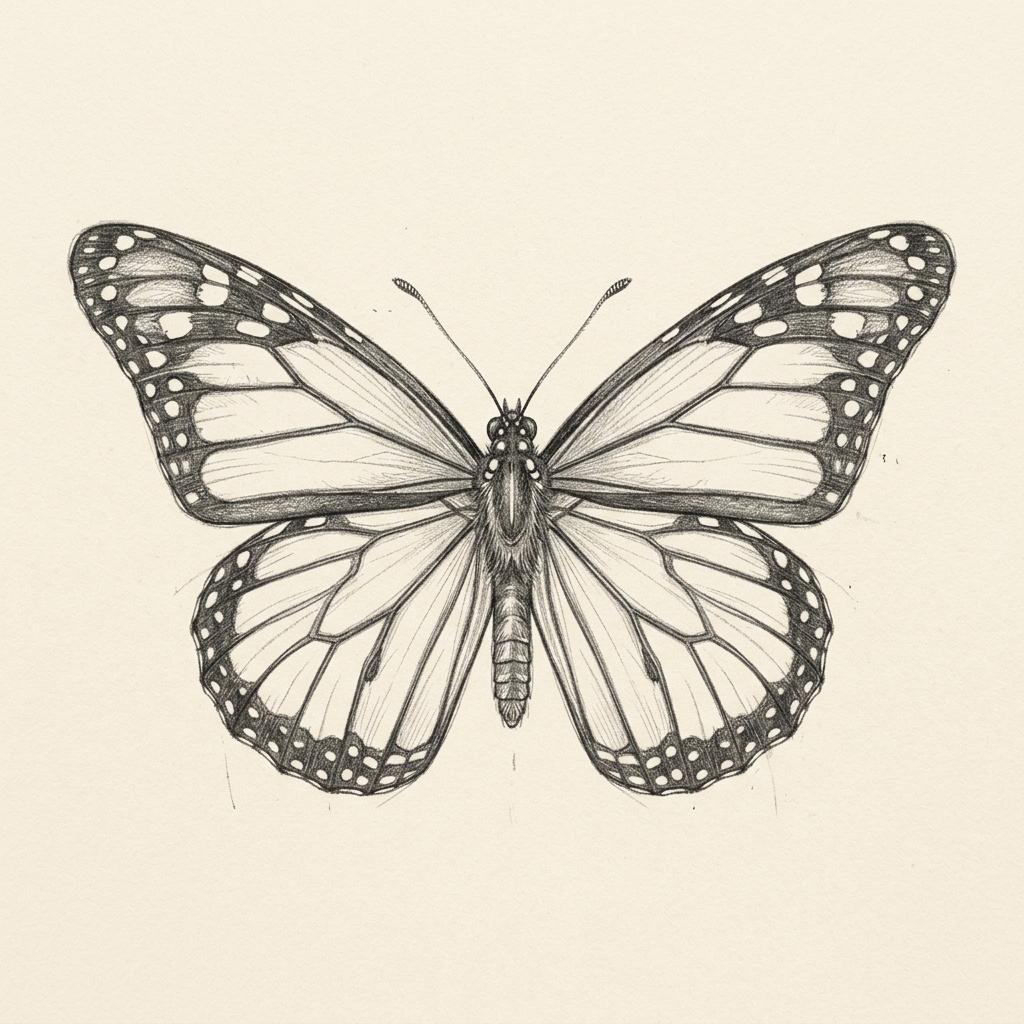
Simple Butterfly Outline
easy
Cute Butterfly Sketch
cute
Classic Butterfly Portrait
realistic
Side Profile Butterfly
easy
Shaded Butterfly Study
realistic
Notebook Butterfly Doodle
cuteHow to Draw a Butterfly Step by Step
Easy Beginner Guide • 10 Minutes
Step 1: Center Body & Symmetry Grid
Draw a narrow vertical oval for the thorax and abdomen, then sketch a horizontal cross-line to keep both wings symmetrical.
Step 2: Upper Forewing Triangles
Sweep two large rounded triangles upward and outward from the thorax, keeping the outer corners softly curved.
Step 3: Lower Hindwings & Antennae
Tuck two rounded teardrop hindwings beneath the upper wings and add two gracefully curled antennae at the head.
Step 4: Monarch Veins & Spotted Border
Sketch the central teardrop cell inside each wing, radiate curved veins outward, and shade the dark border leaving tiny white dots.
Printable Butterfly Drawing Practice Sheets
Prefer practicing offline at your desk? Studio Members can download printable butterfly drawing reference packs with faint proportion grids and clean outline templates for personal or classroom sketching.
Butterfly Drawing FAQ
How do beginners start an easy butterfly drawing?
Start by blocking in the largest basic shapes with light HB pencil strokes before adding small details. You can click any reference image above to open Study Mode with a 3×3 proportion grid.
What pencils work best for shading a butterfly drawing?
An HB pencil is ideal for clean construction lines, while a 2B or 4B graphite pencil helps build soft tonal transitions and deeper shadow accents without pressing hard into the paper.
How can I check if my butterfly drawing proportions look balanced?
Use the Flip Horizontal tool inside Study Mode or hold your sketchbook up to a mirror. Reversing the image immediately reveals subtle symmetry or angle shifts.